
 Tiny’Loudi
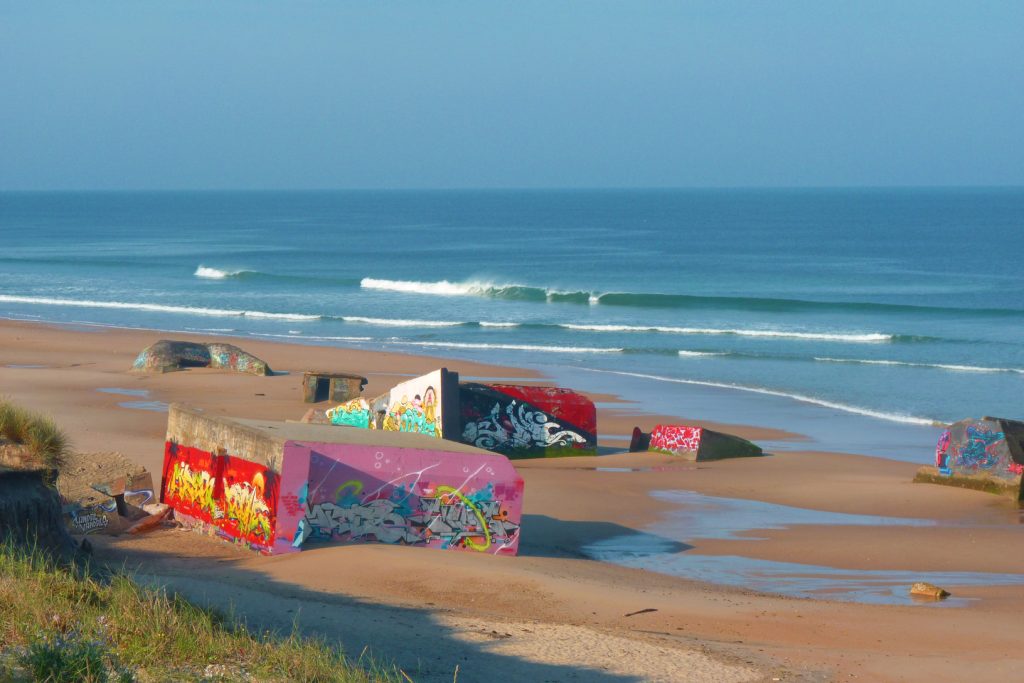
13 km
Le Gurp beach
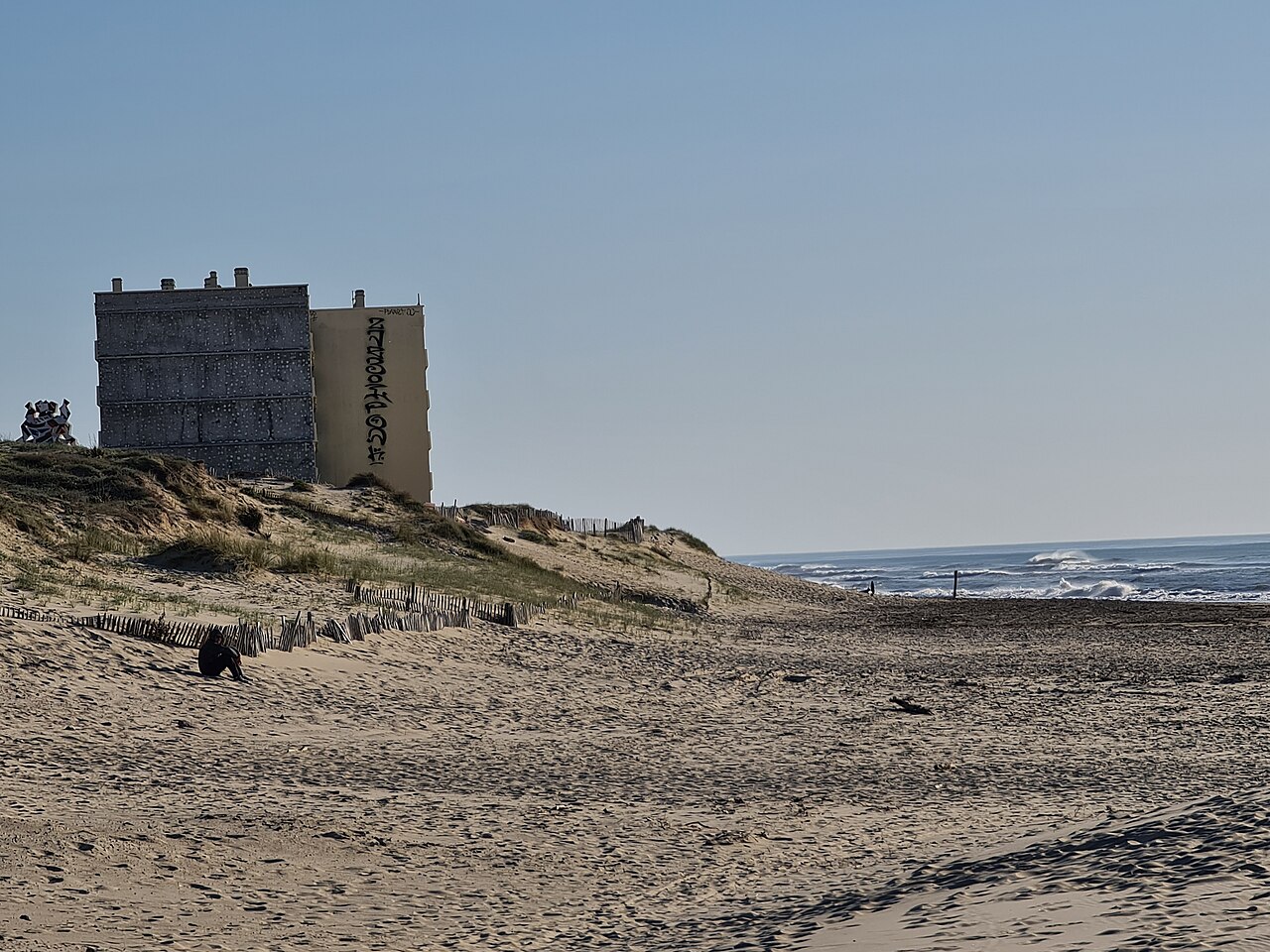
Its street-art blockhouses, its surf waves and its sunsets over the Atlantic. Closer, Les Olives beach (9 km) is family-friendly and Les Cantines (11 km) is wild, facing the Cordouan lighthouse.
Talais · Médoc · Gironde
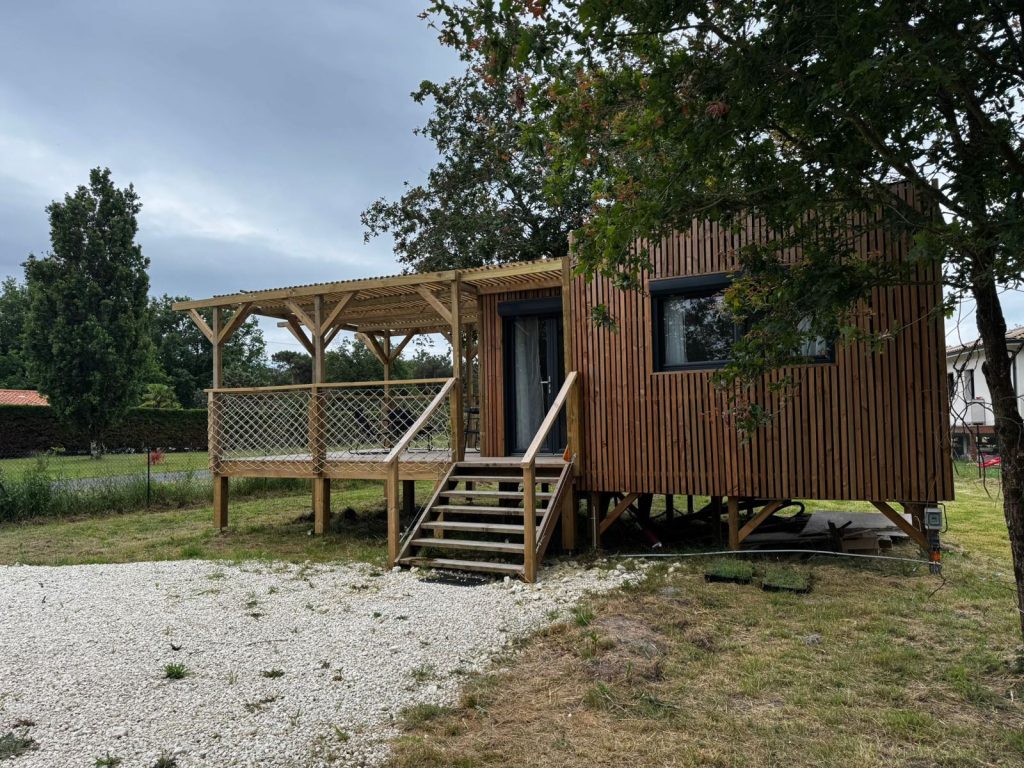
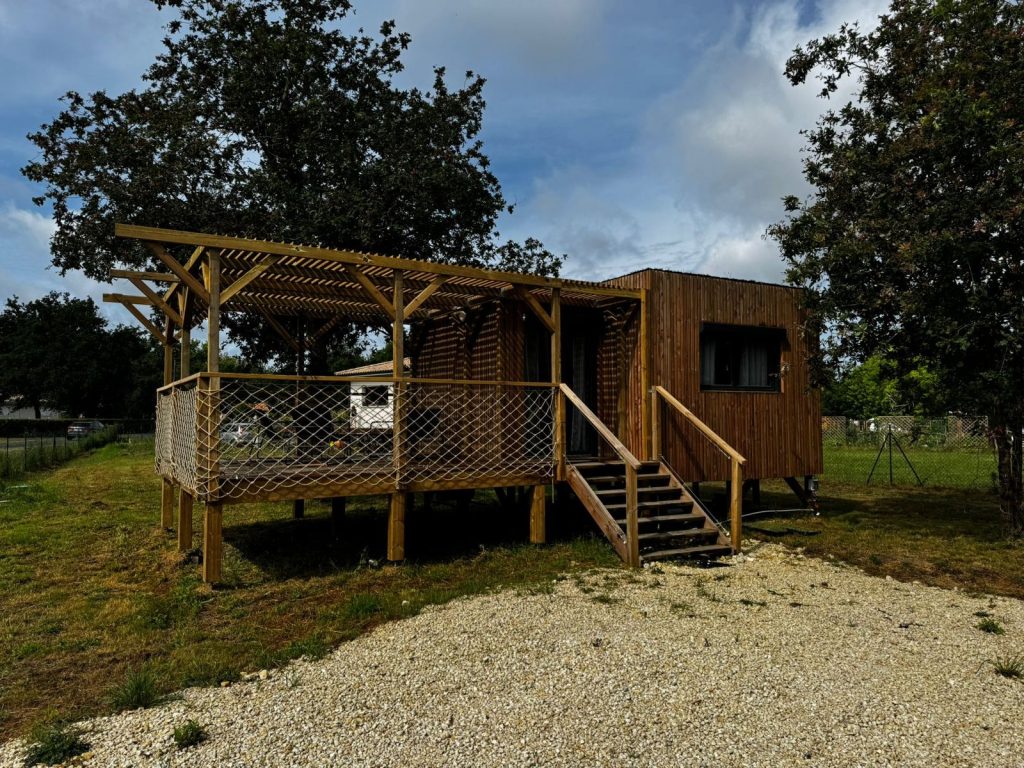
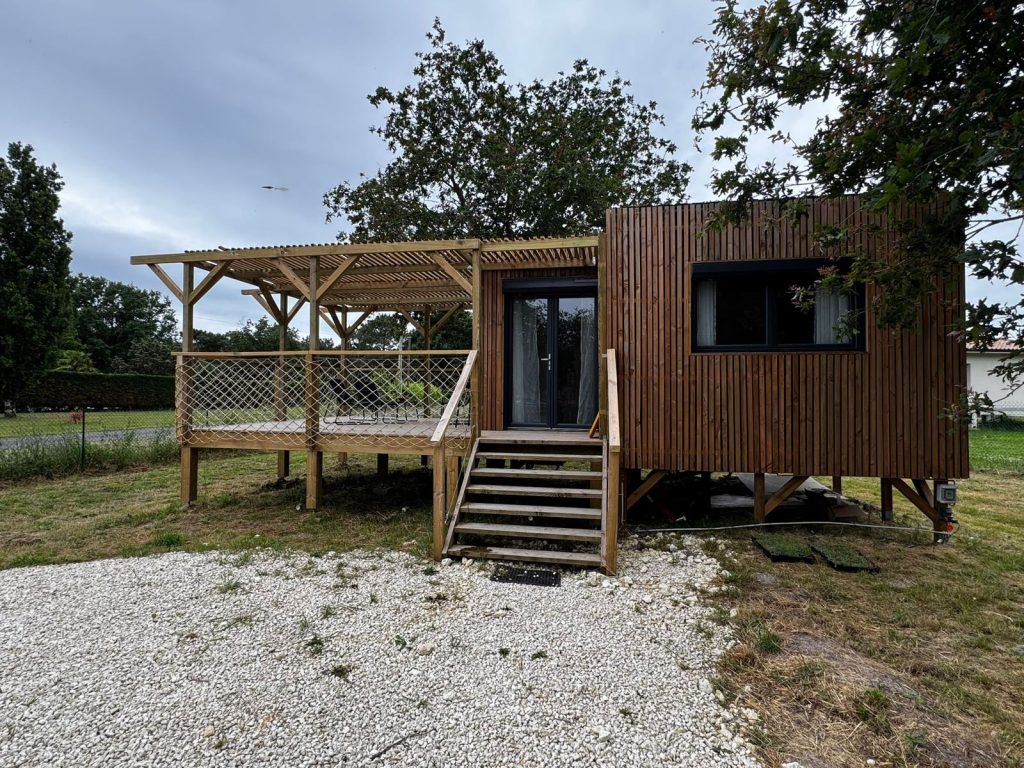
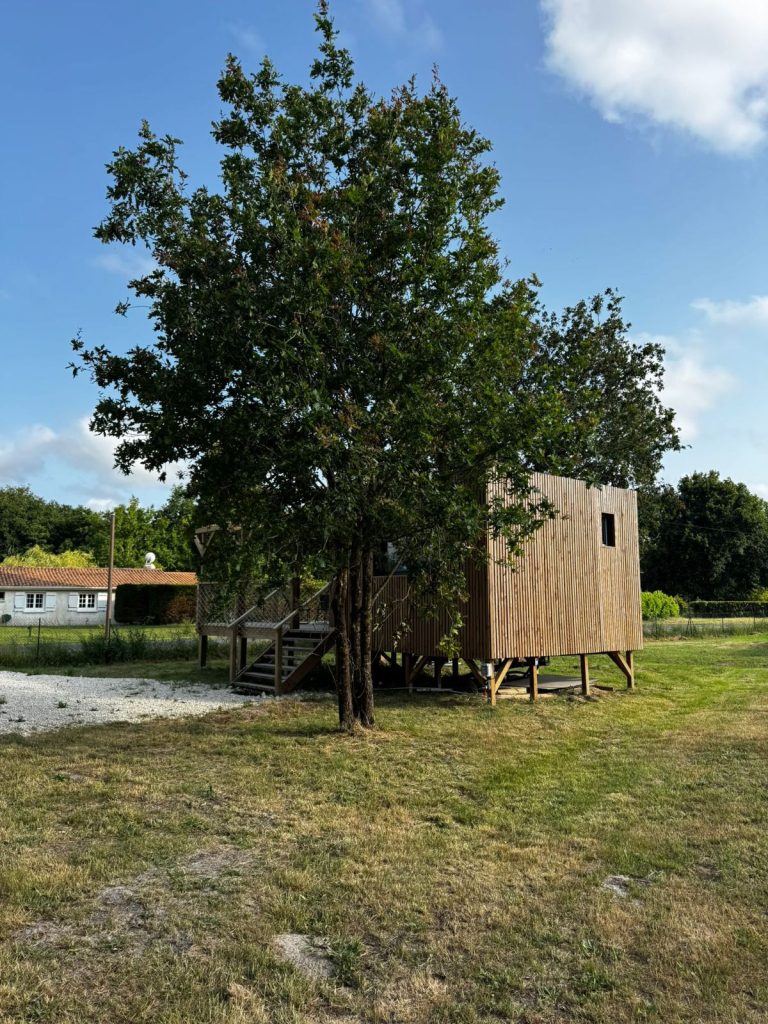
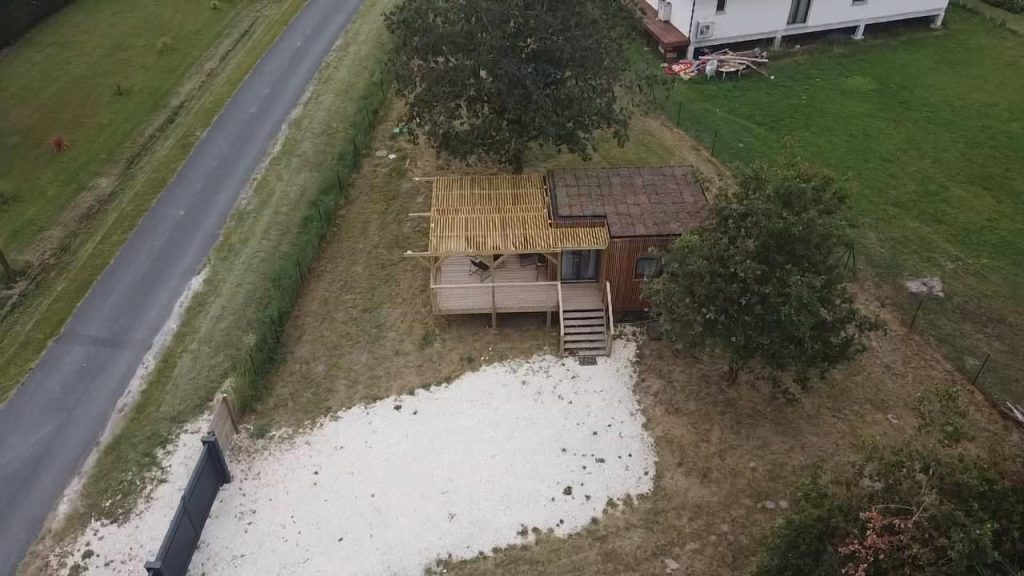
A wooden tiny house for two, set under the oaks on a fenced 1,000 m² plot. Wild beaches, fishing huts and vineyards within cycling distance.
The tiny house
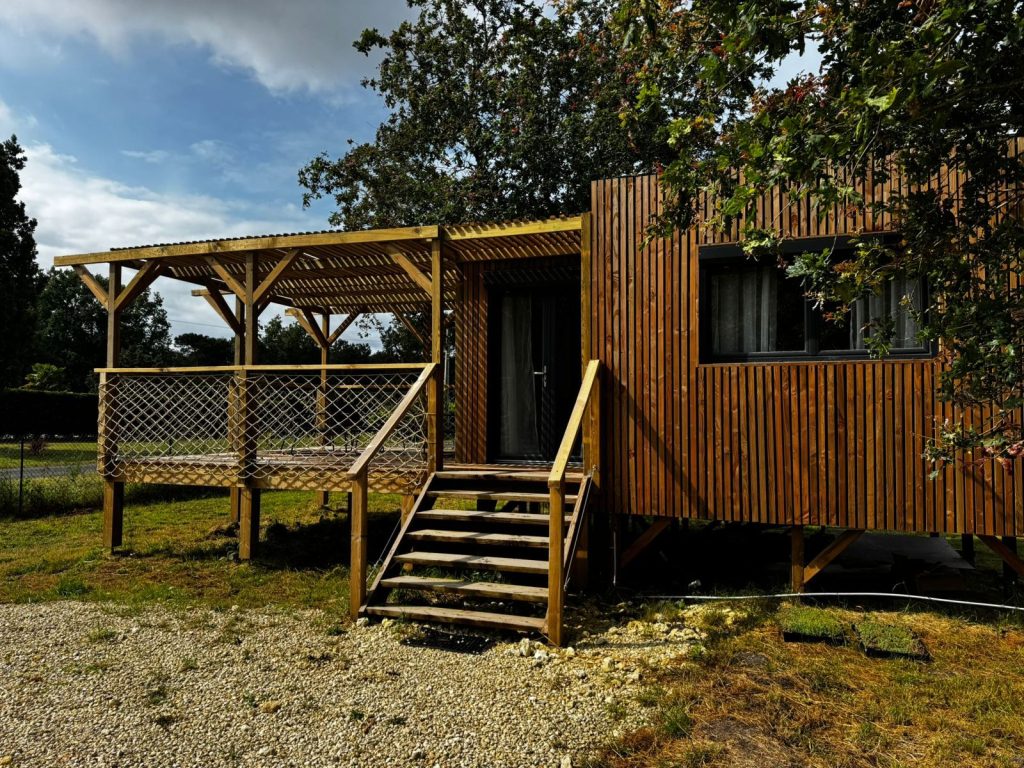
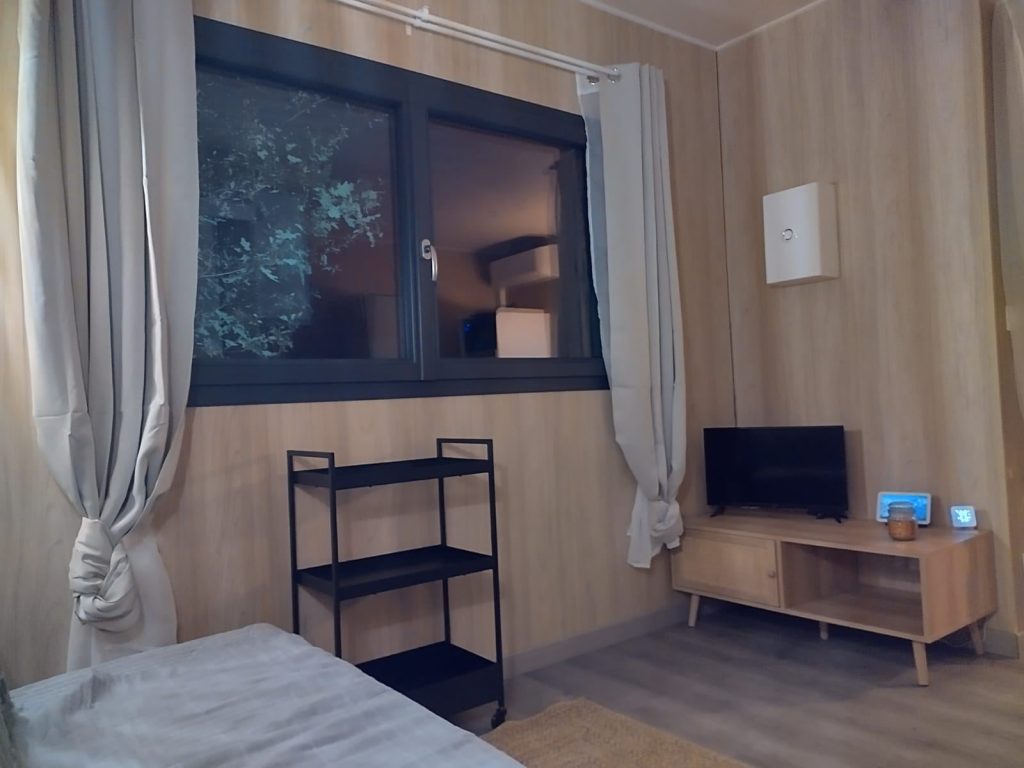
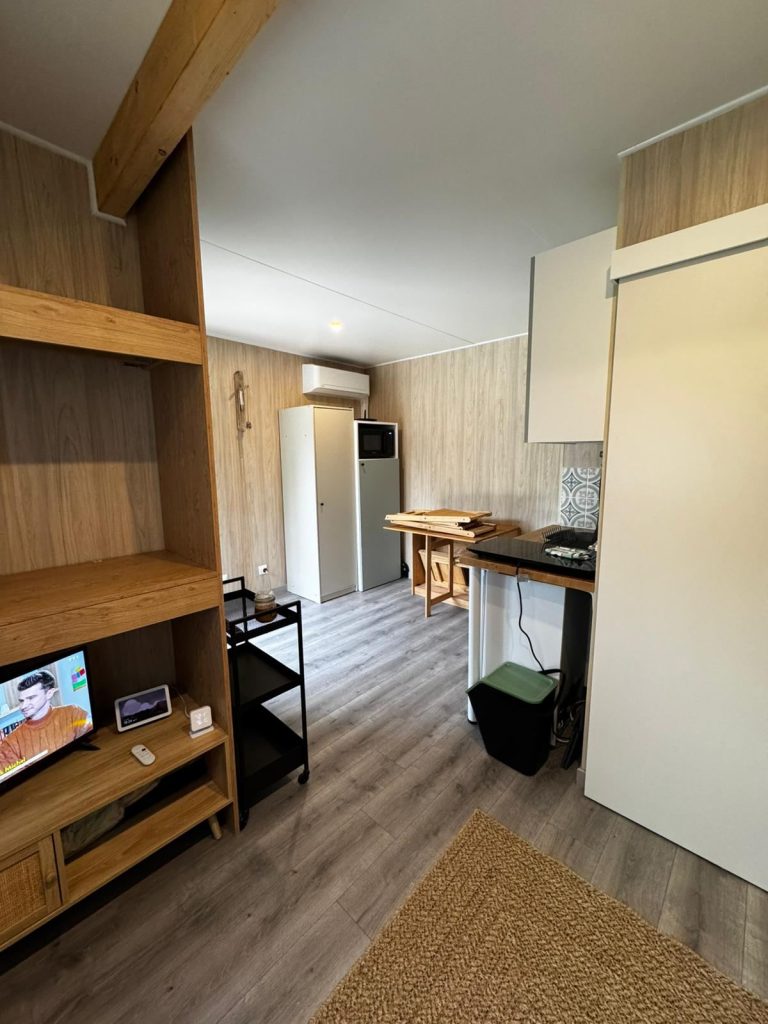
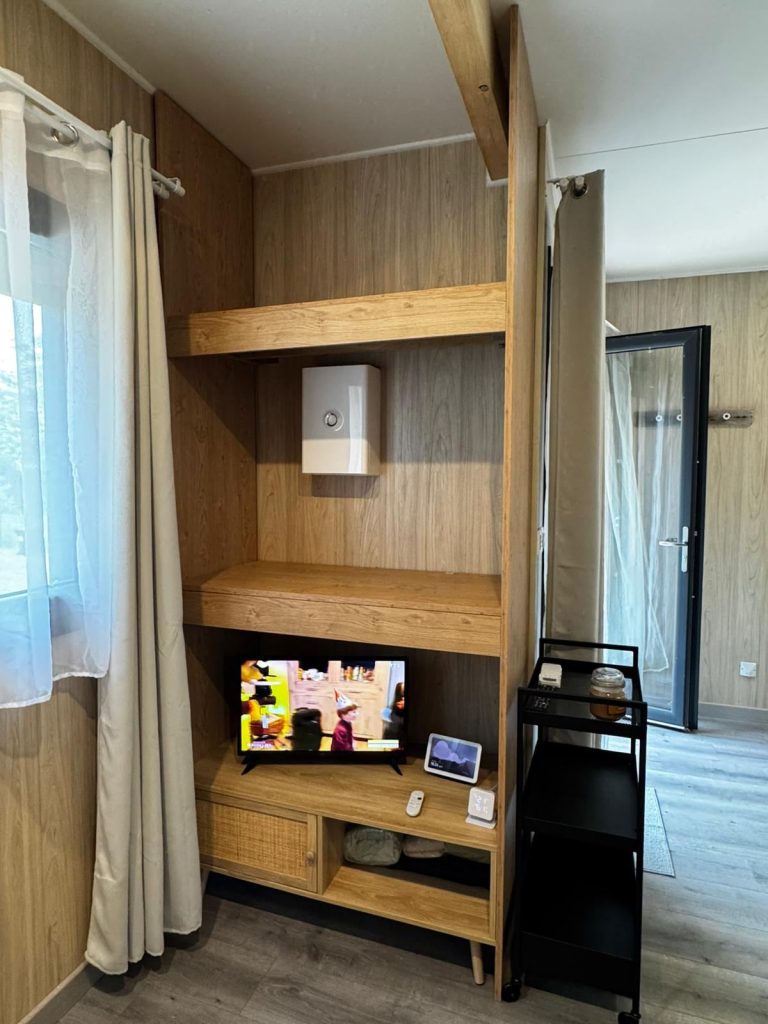
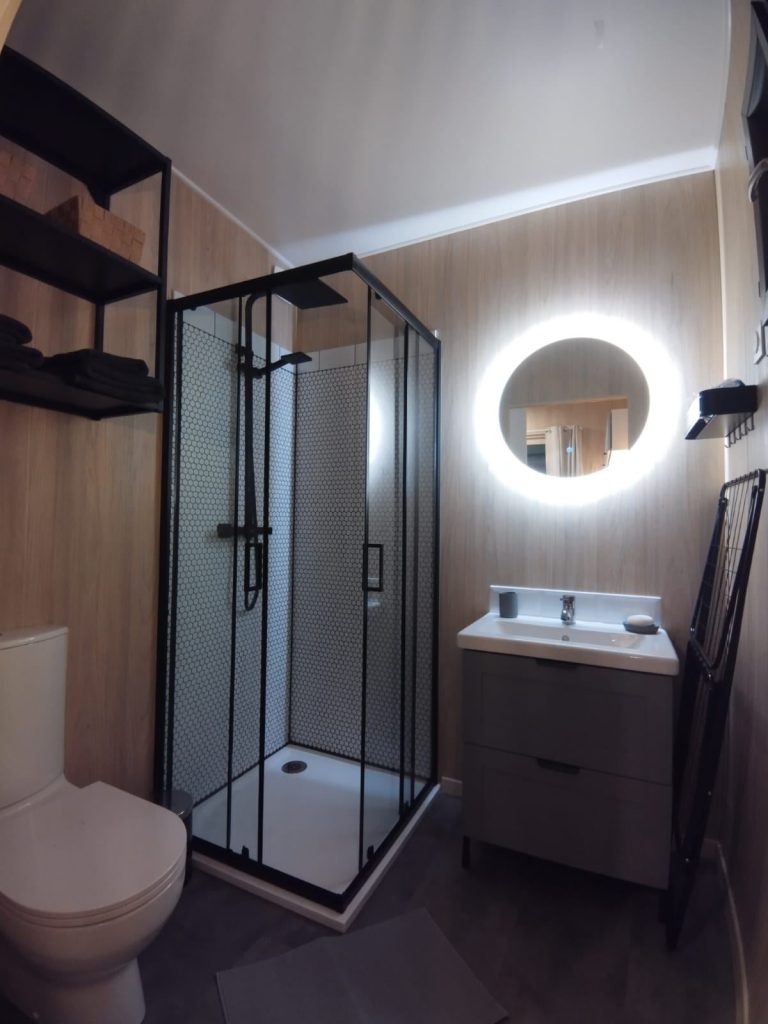
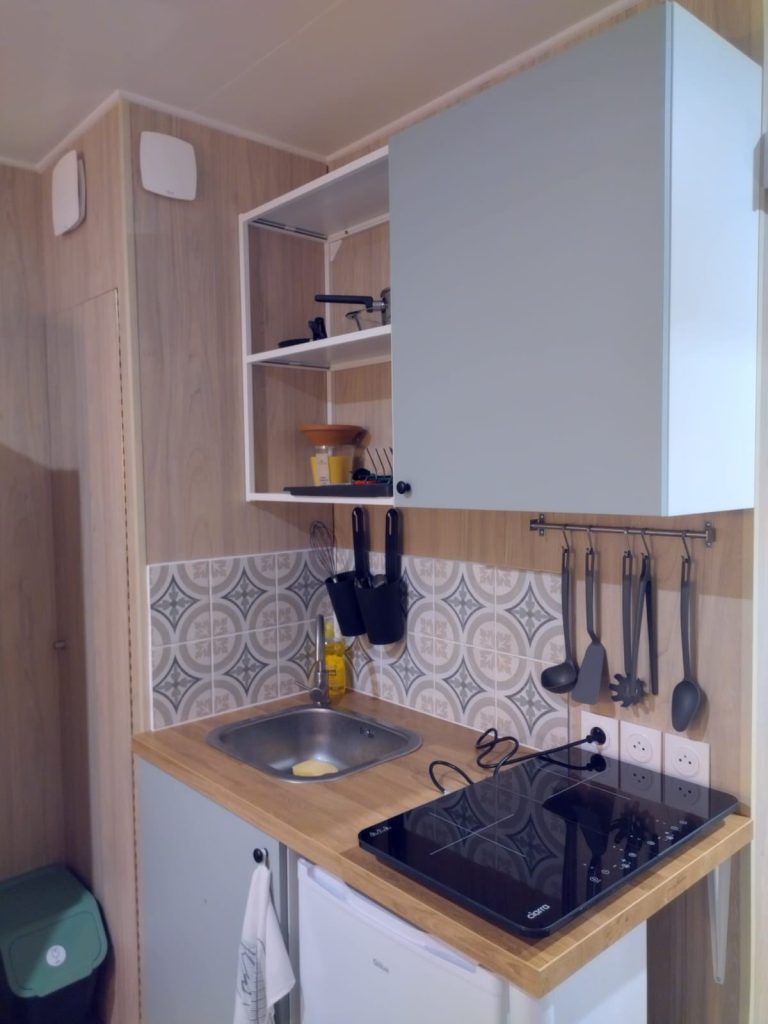
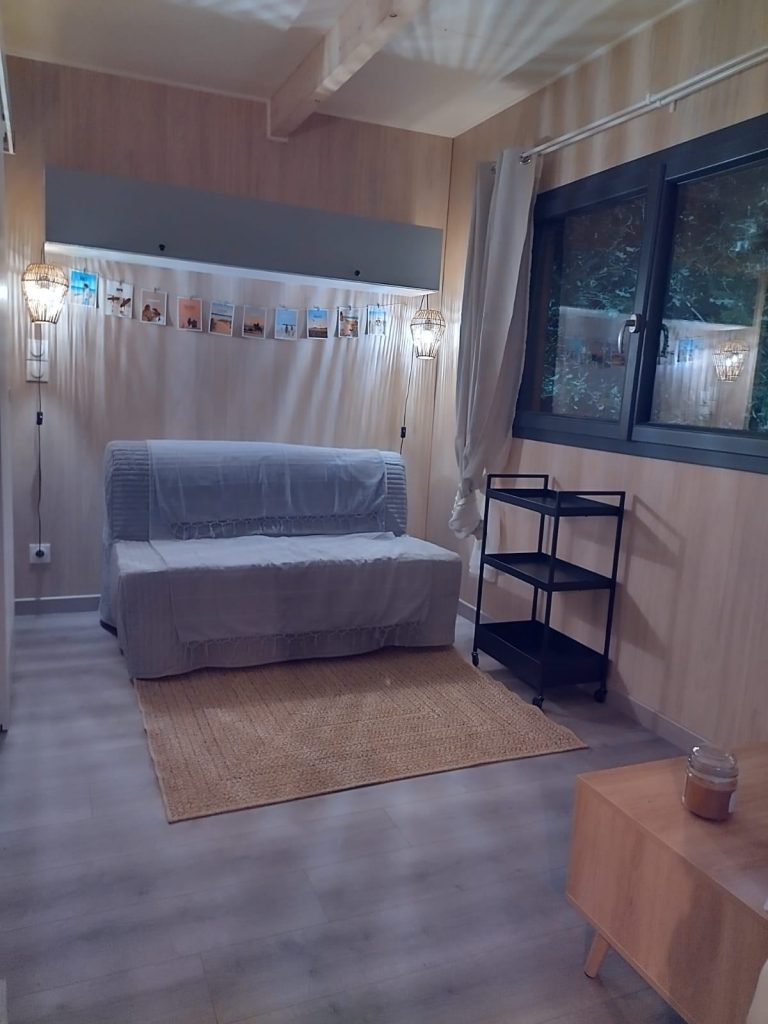
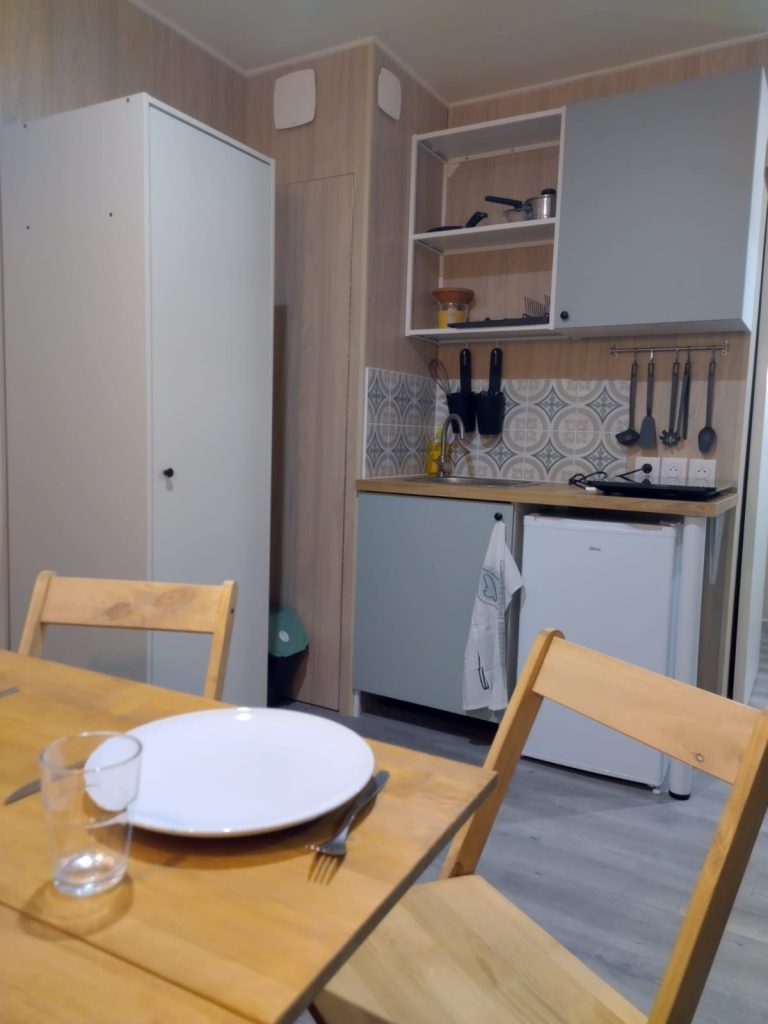
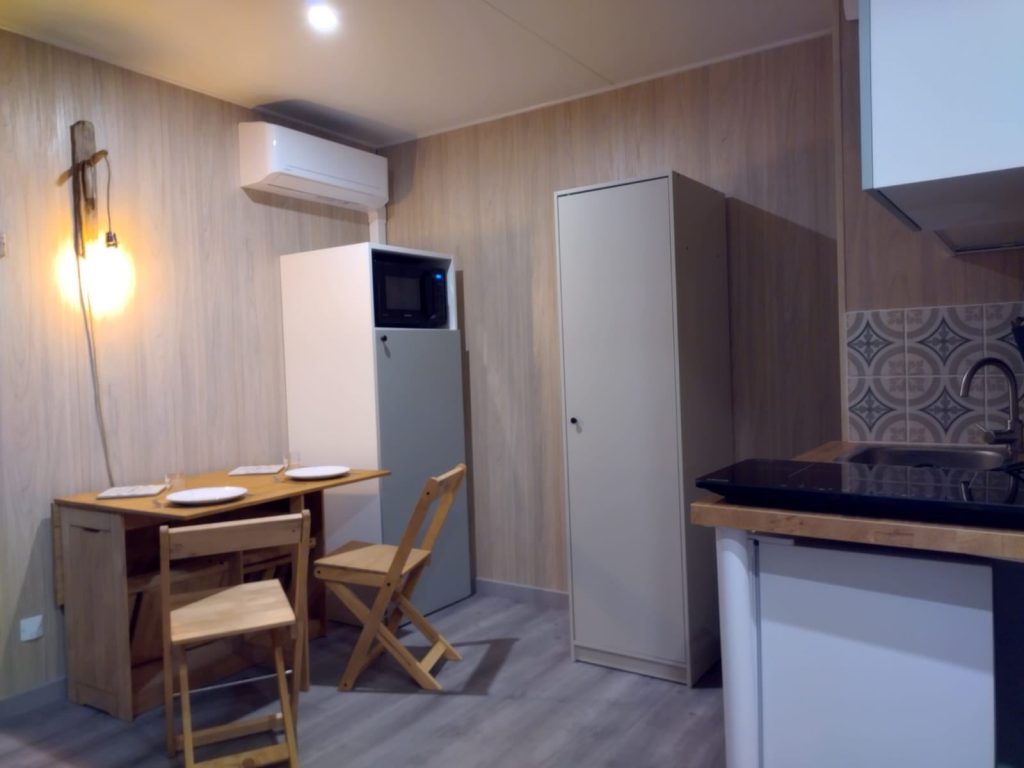
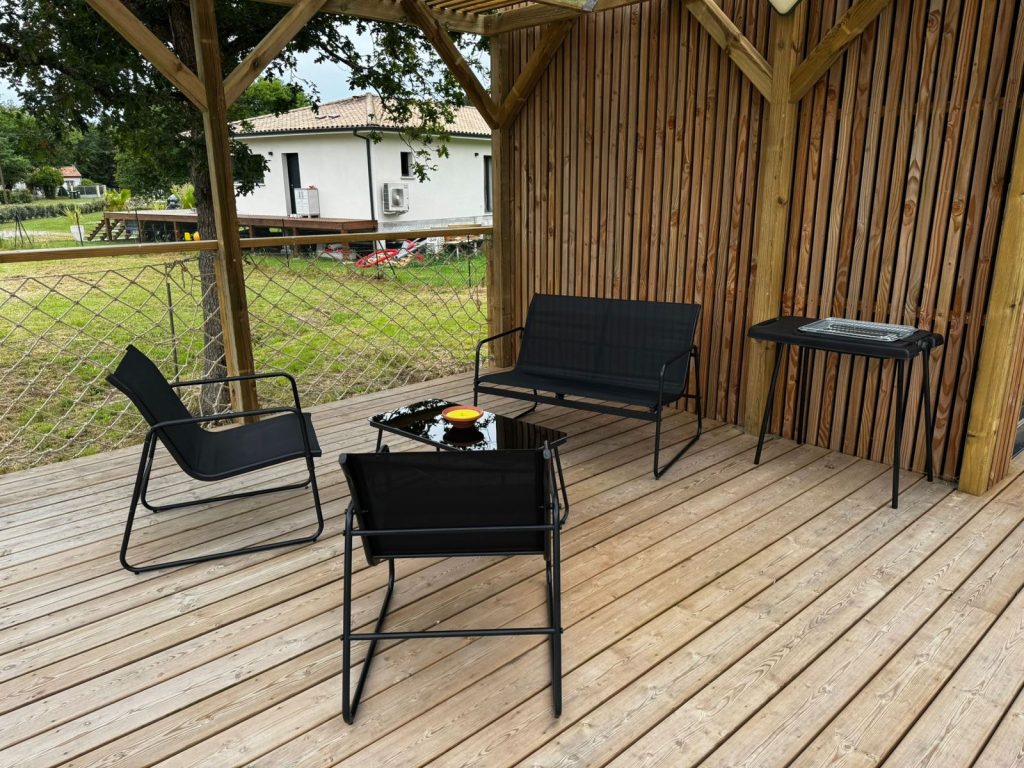
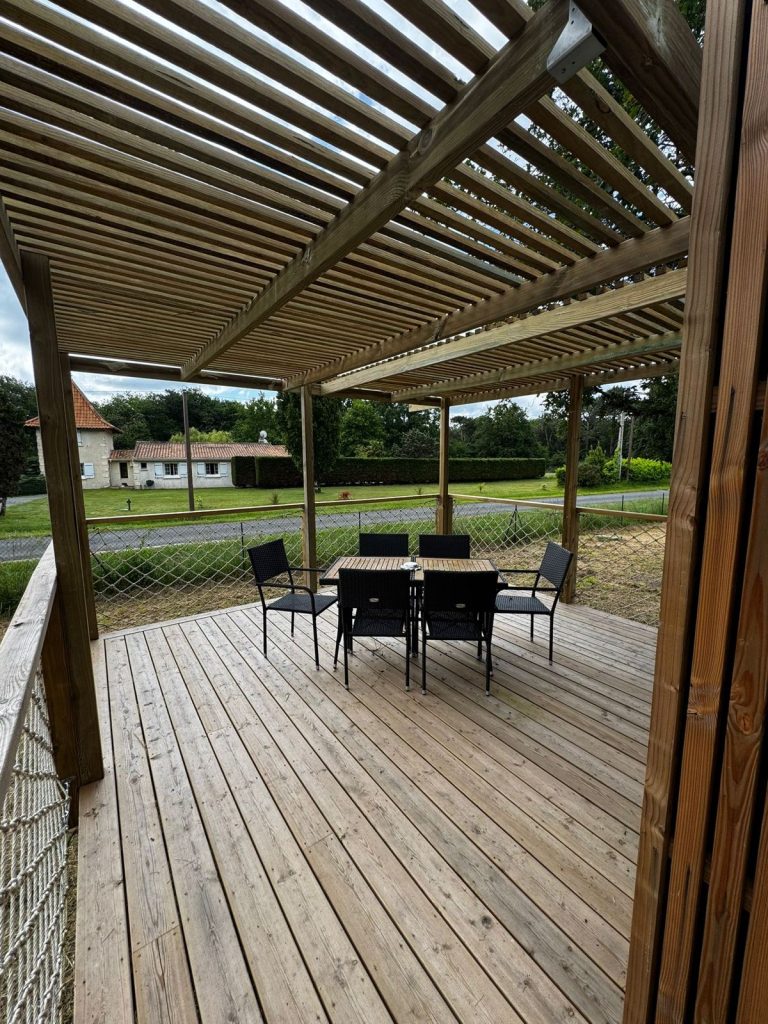
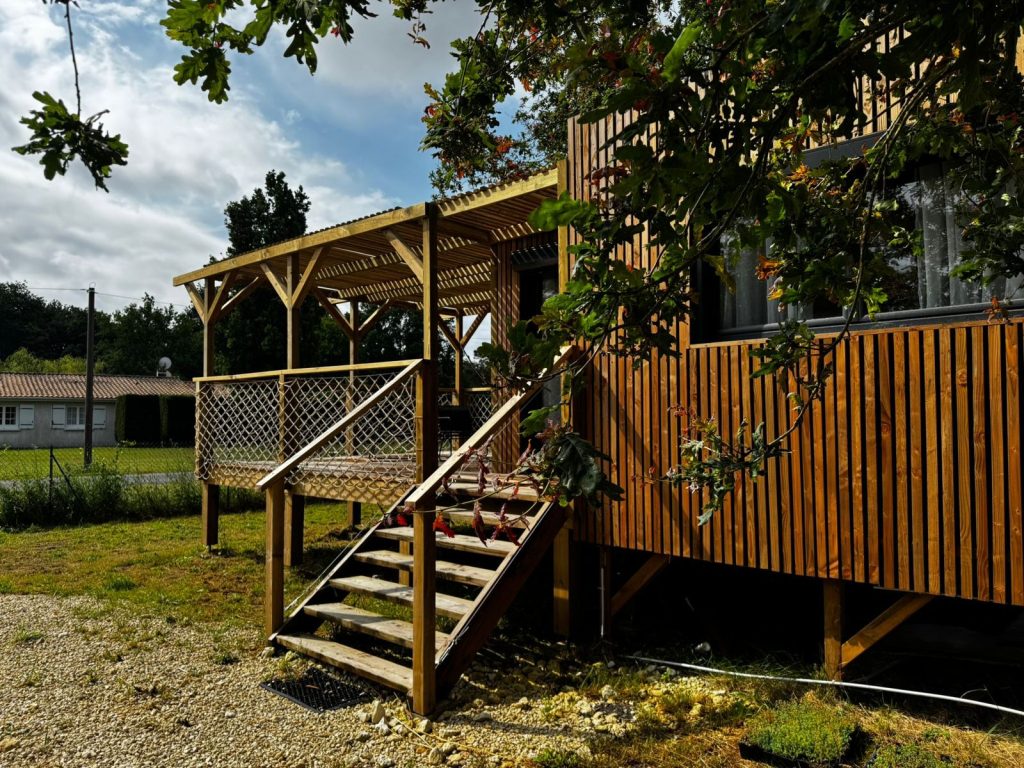
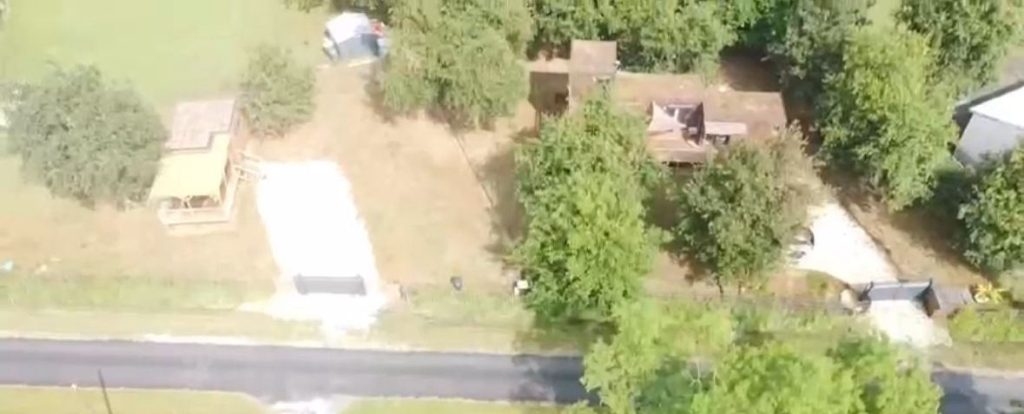
Perched on stilts, the tiny house fits into 20 m²: a sleeping area, a kitchen, a shower and well-thought-out storage. The rest happens outdoors, on the terrace and under the trees.
Terrace & garden
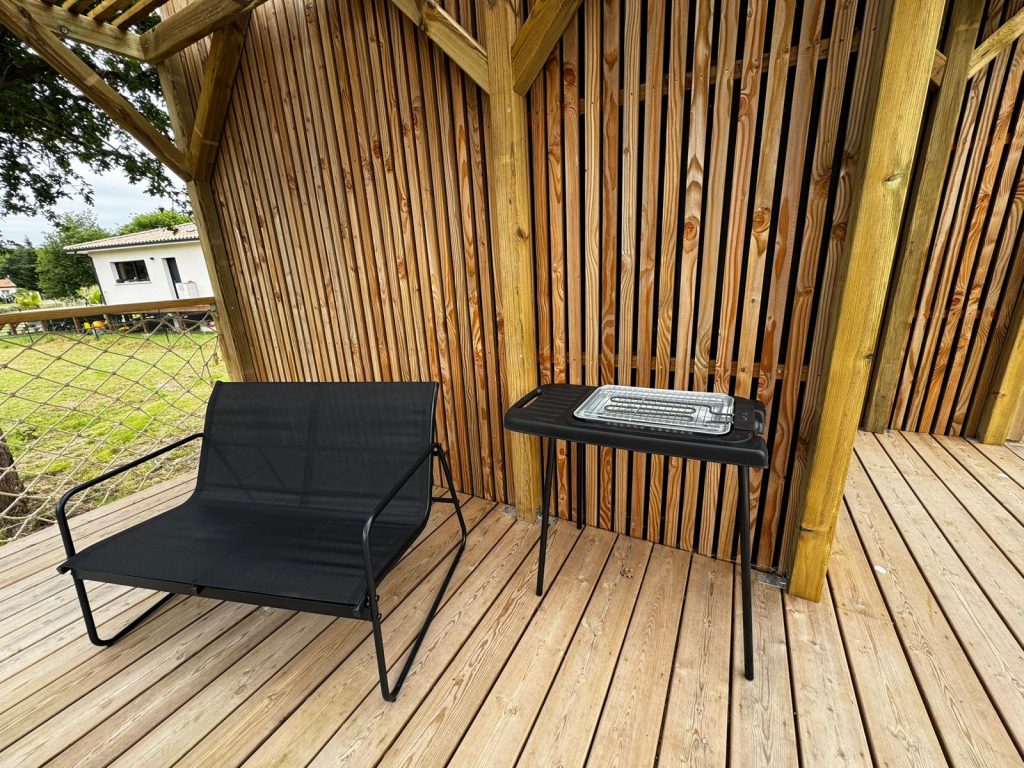
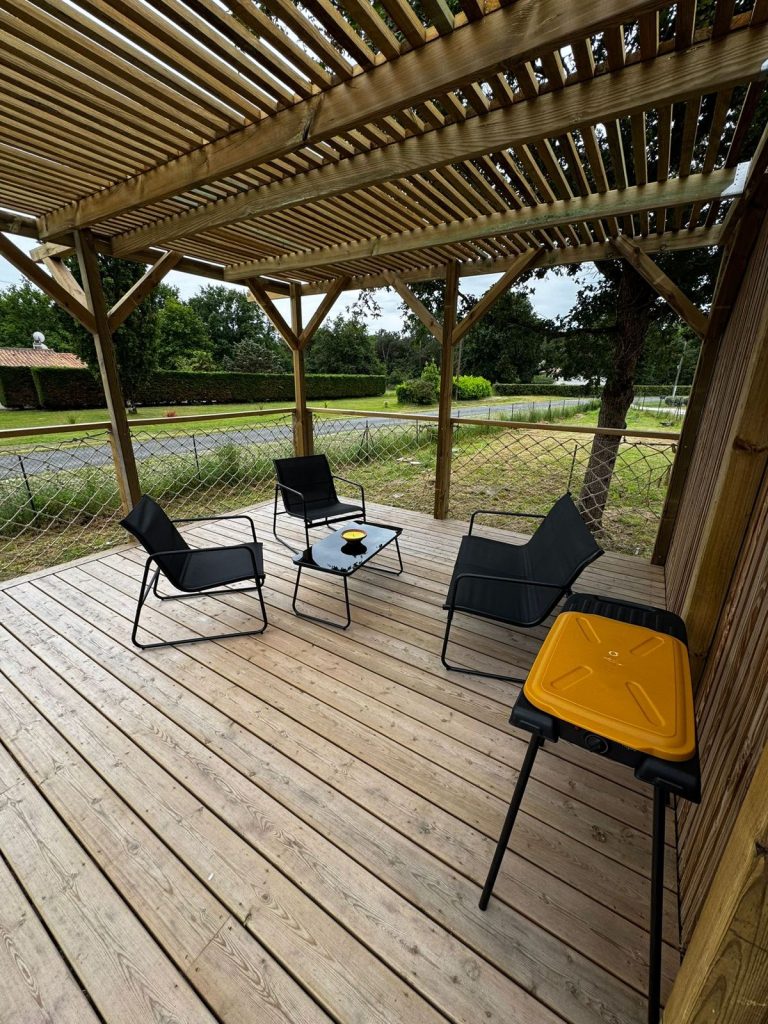
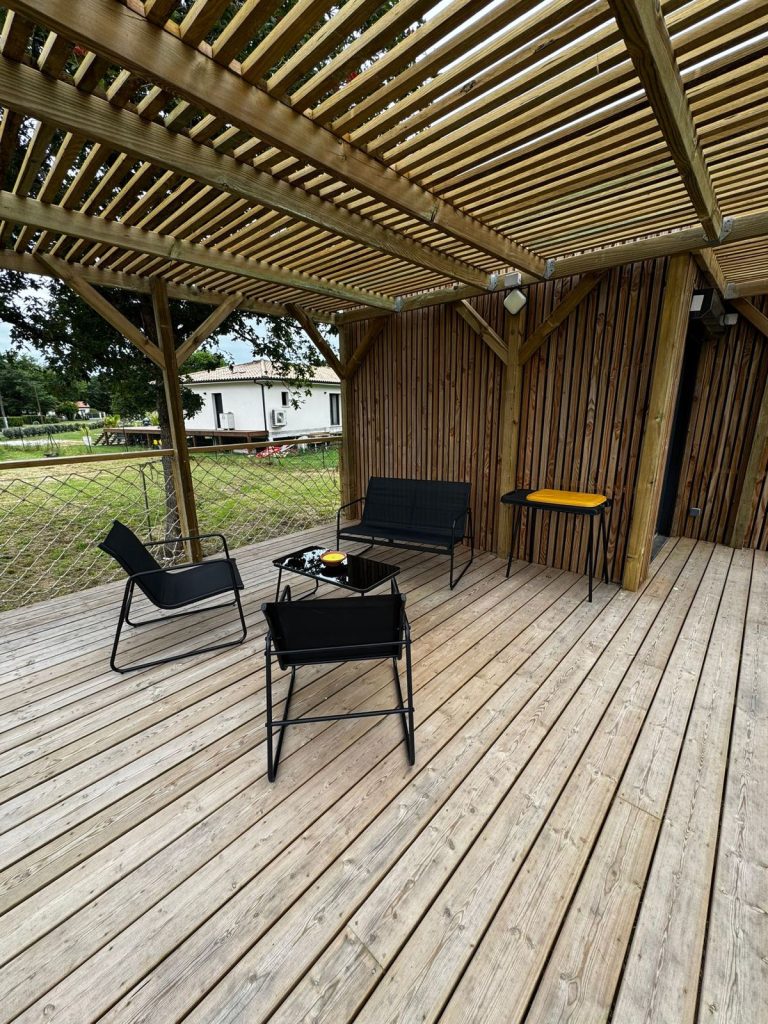
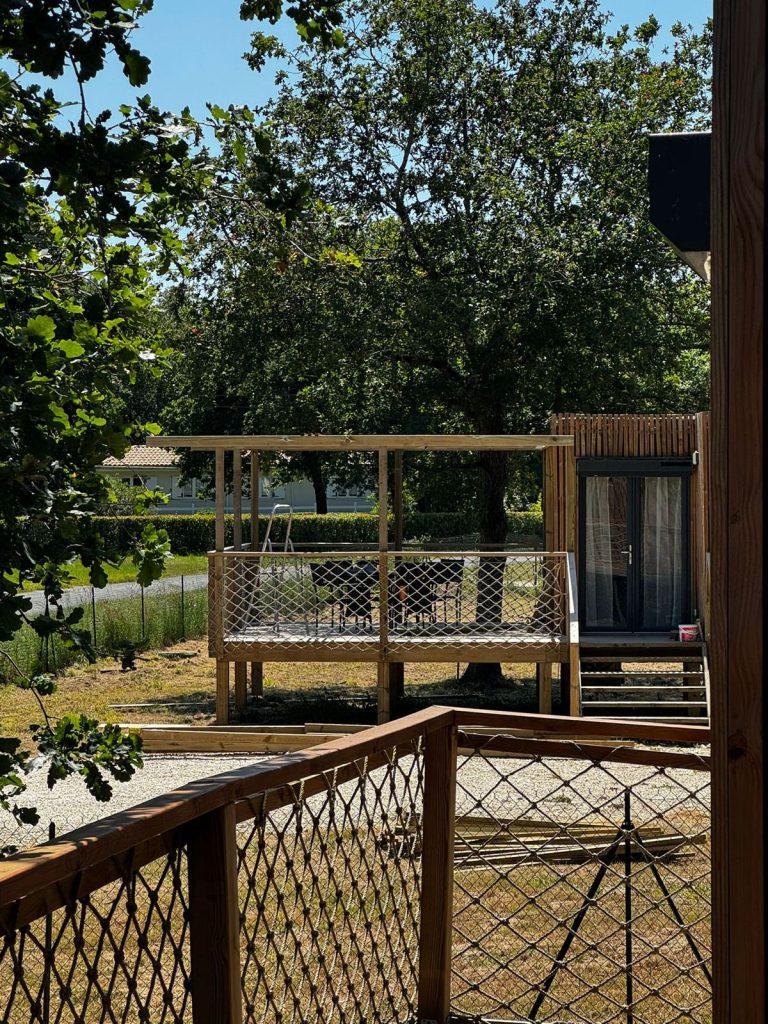
A wooden terrace under a pergola, a barbecue, armchairs in the shade and a fully fenced garden lined with trees. The gate opens with a code: arrive whenever you like.
Around
In Talais you are at the tip of the Médoc: the village, its shops and its harbour are close by, and the wild beaches about ten kilometres away.
Its street-art blockhouses, its surf waves and its sunsets over the Atlantic. Closer, Les Olives beach (9 km) is family-friendly and Les Cantines (11 km) is wild, facing the Cordouan lighthouse.
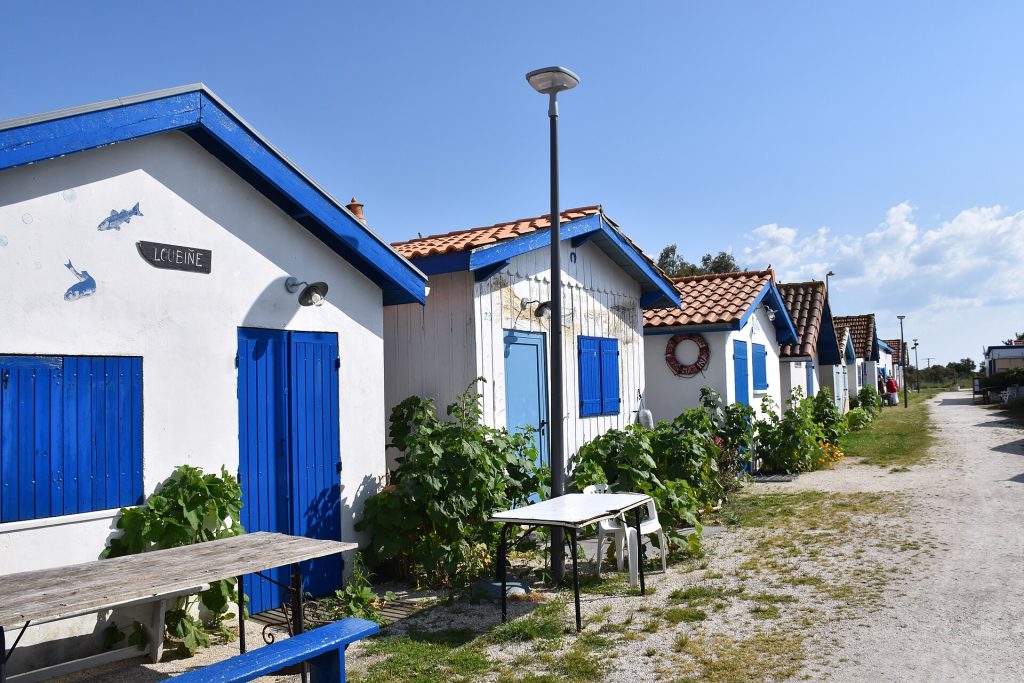
Oysters from the oyster farmers, seasonal open-air cafés and fishermen’s huts on the estuary shore: the local gem, a few minutes away.
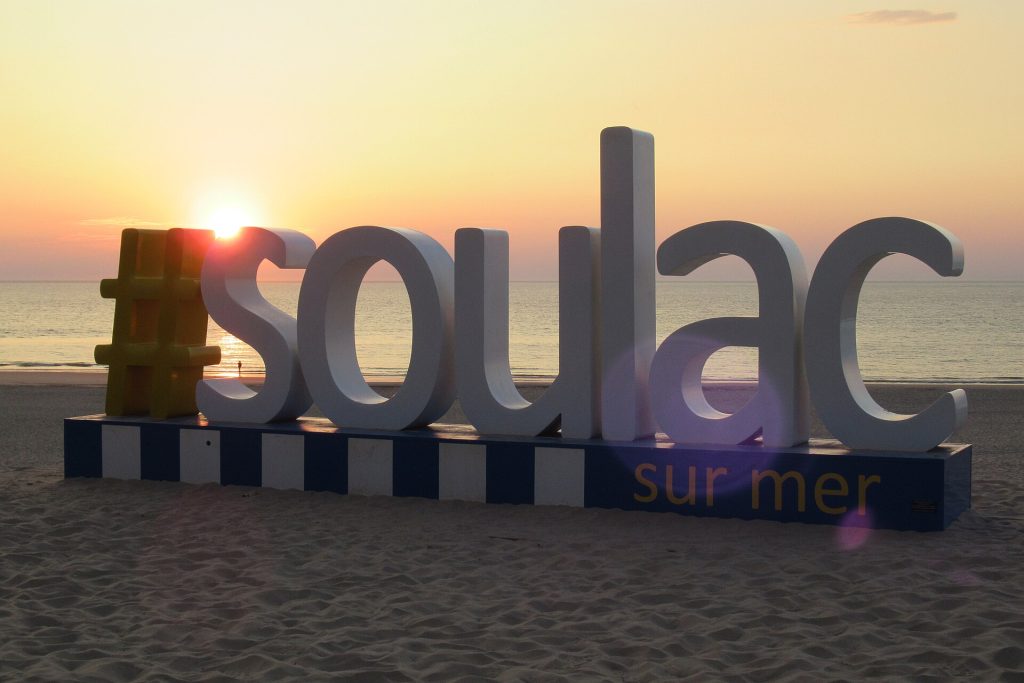
Its big beach, Belle Époque villas and covered market, 10 minutes away. The railway station is 9 km away.
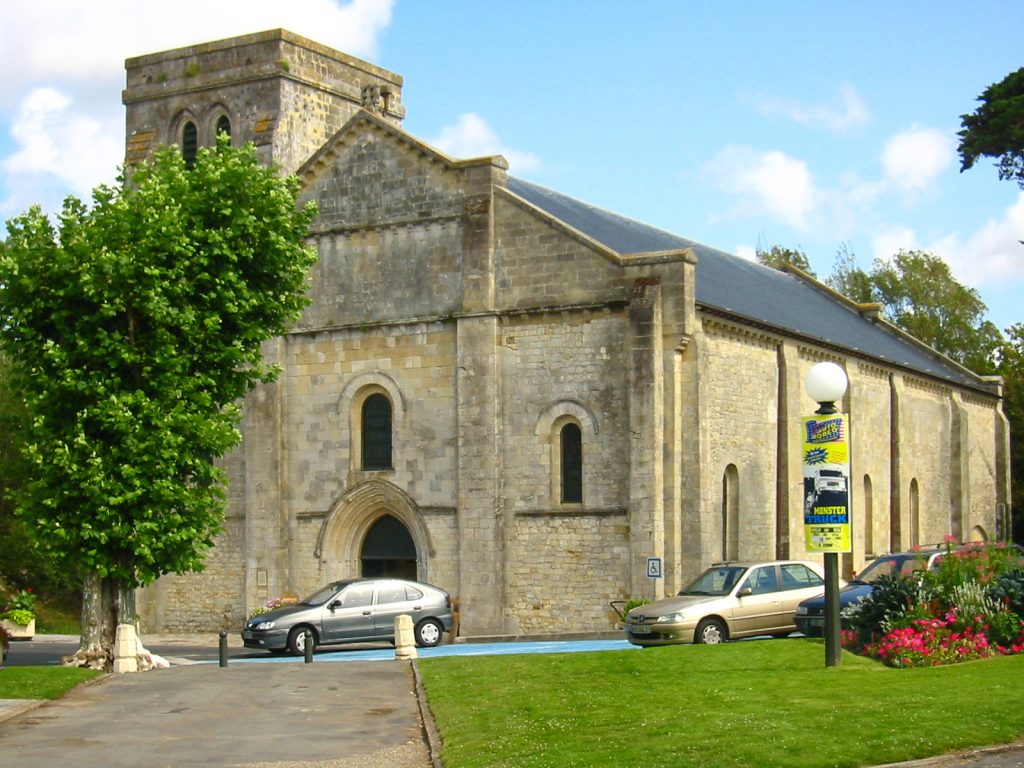
Notre-Dame-de-la-Fin-des-Terres, a UNESCO World Heritage site, lay buried in sand for a long time before coming back to light.
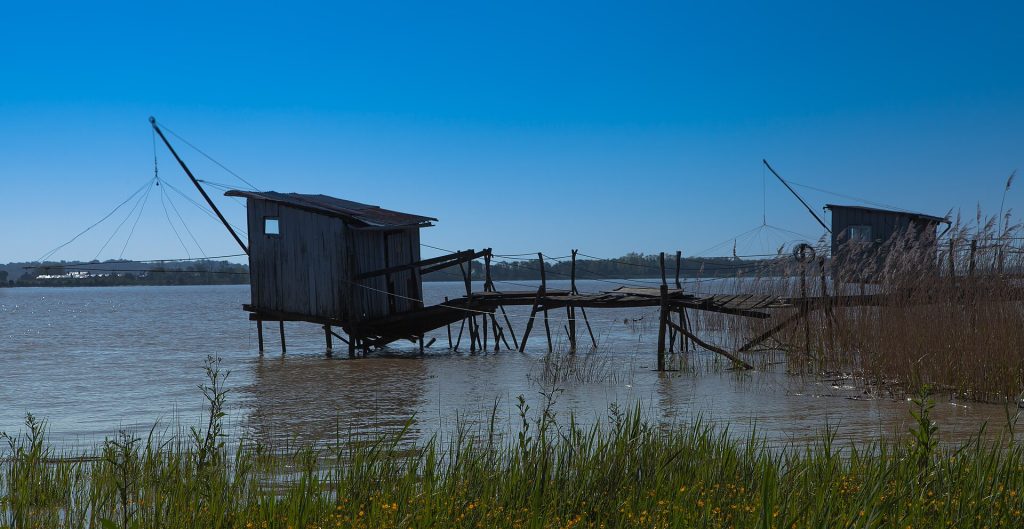
The fishing huts on stilts, the Pointe de Grave, the Batterie des Arros. You stroll there, you don’t swim.
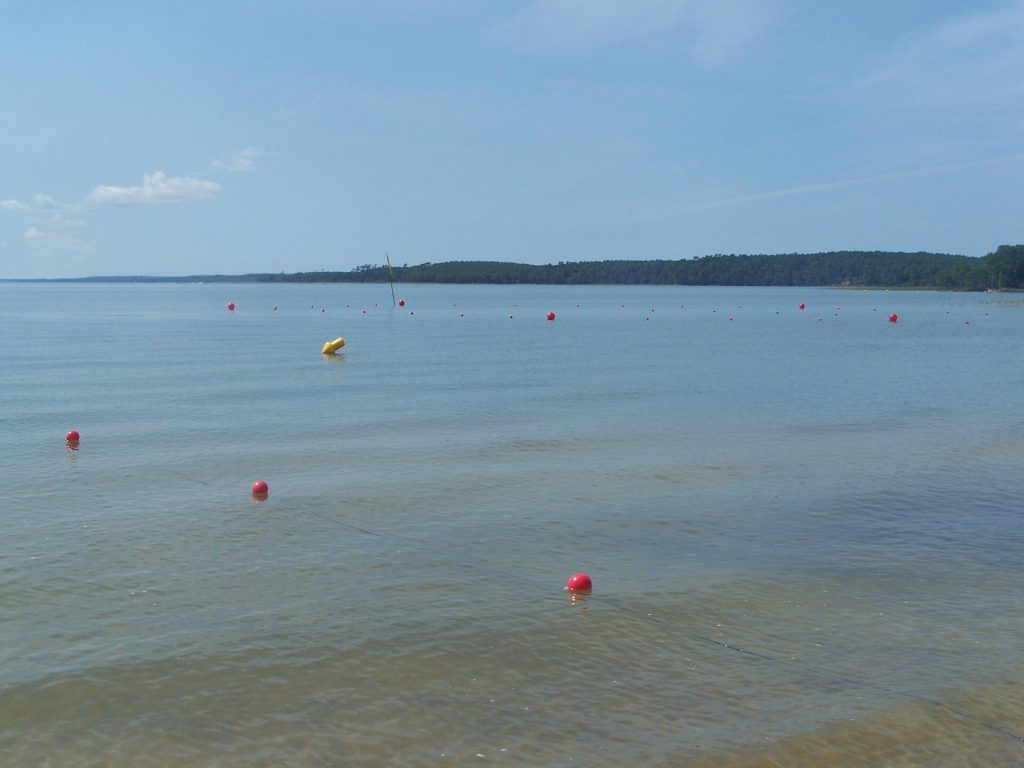
Marshes, forests, lakes and vineyards: the Médoc is a regional nature park, criss-crossed by cycle paths, with the wine route and the coast’s surf spots.
Bakery and grocery under 1.5 km, supermarkets and covered market 10 minutes away. For the beach, allow 10 to 15 minutes by car, or a lovely afternoon by bike along the cycle paths.
Stays
A terrace for breakfast, armchairs in the shade of the oaks and the beach for the sunset. The tiny house is made for a stay for two.
The 1,000 m² plot is fully fenced and the gate closes with a code: dogs are welcome on request, a supplement may apply.
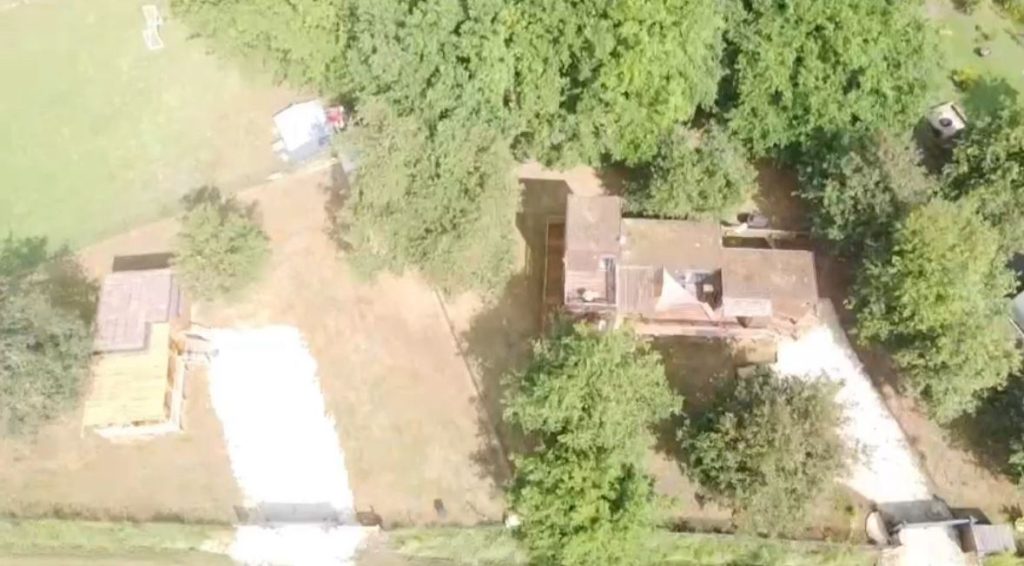
The tiny house is next to Aloudi House, our wooden house with six beds. Book both to share a stay with family or friends.
Everything you need a few minutes from the tiny house: you can reach the village on foot or by bike, Soulac by car.
History and geography
Famous for its beaches, surf spots and vineyards, the Médoc has a history you can barely guess: that of a marshland turned farmland, which the ocean continues to reshape.
At the end of the 16th century, the Bas-Médoc was for half of the year a fragmented territory of marshes and waterlogged soils, an in-between world where you could neither sail as on the sea nor walk as on dry land. The landscape we know today was shaped by human activity, starting from works undertaken in the 17th century and completed thanks to expertise from Holland.
The Netherlands take their name from the height of their land, largely below sea level. Exposed to the risk of flooding since forever, they developed a know-how in hydraulic engineering that France did not have. It arrived with people from Holland, who turned to the Médoc at the end of the 16th century under pressure from political and religious conflicts.
One man knew how to put this expertise to use: Humphrey Bradley. An edict entrusted him with the task of draining the floodplains and marshes to make them suitable for meadows, ploughing and pasture. This mission earned him the title of “master of the dykes and canals of the kingdom”. The foreign craftsmen who accompanied him, mainly from the Netherlands, could be naturalised without paying the droit d’aubaine tax, and the drained land gave him, once the works were done, a right of ownership and use over most of it.
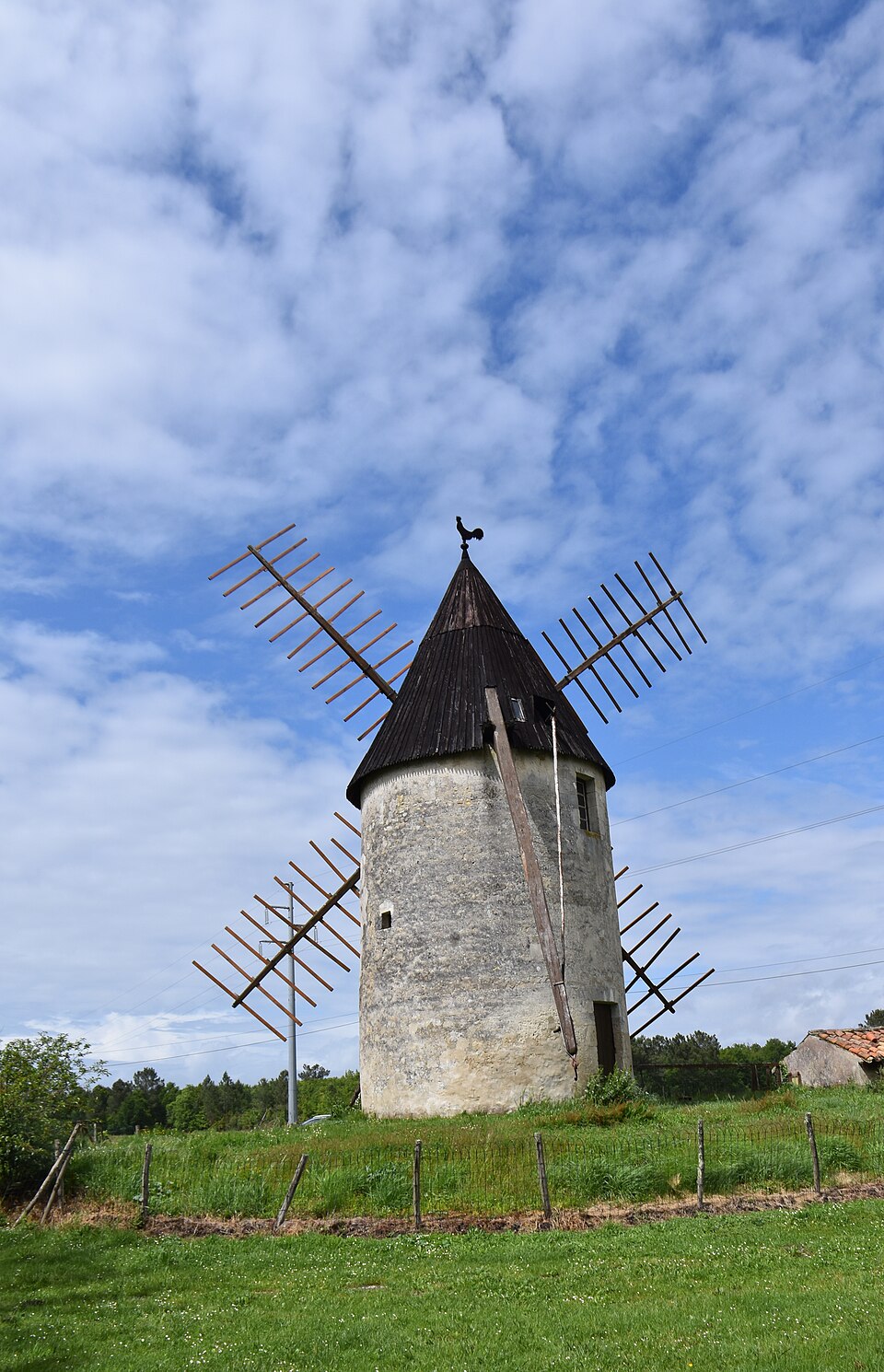
From then on, the marshy soil gave way to fertile silt, on which agriculture, and later the vines and wine of the Médoc, developed. The Dutch legacy can also be read in the mills that appeared to process certain crops. This little-known work transformed the region’s economy and health as radically as its shape, and Médoc culture is still steeped in this mix that sets it apart from the rest of France.
The flip side: drained of its waters, the Médoc is today very exposed to rising sea levels, which would make the Gironde rise by the principle of communicating vessels. As in the Netherlands, the risk is that the level of the dykes will one day be exceeded, at first exceptionally. Regulations now require new buildings to be raised.
Aloudi House, the neighbouring house, is built in an area covered by this regulation: its raised floor protects it from any flooding, and Tiny’Loudi also stands on stilts. In the very long term, a new submersion of the land remains likely and only retreat can be considered. Aloudi House was therefore designed on piles and stilts so that it can be removed without leaving a trace on the land.
Our planet is not perfectly round, and it is 72% covered in water, 97% of which is in the seas and oceans. This liquid mass is subject to the attraction of the Sun and the Moon, which amplify or weaken that of the Earth depending on their alignment.
The water is alternately pulled towards space, then called back to the planet: on the surface of large bodies of water, so many “mountains of water” move. This is how tides are created, mostly observed on the Atlantic, even though they also exist in the Mediterranean.
The water begins to recede at a certain time, stabilises after about six hours, then returns about twelve hours after the start of the cycle. The lunar cycle lasts 24 h 50 min, a little more than our 24-hour day: tide times therefore shift from day to day. Hence the value of checking the times before going to the beach or the estuary.
Polynesians have been gliding over the water standing on a board for centuries. More than a means of getting around, this simple craft lets a human come into direct contact with the natural element that ensures their subsistence. The ocean holds rich biodiversity, provides half of the oxygen we breathe and absorbs nearly a quarter of our carbon dioxide emissions.
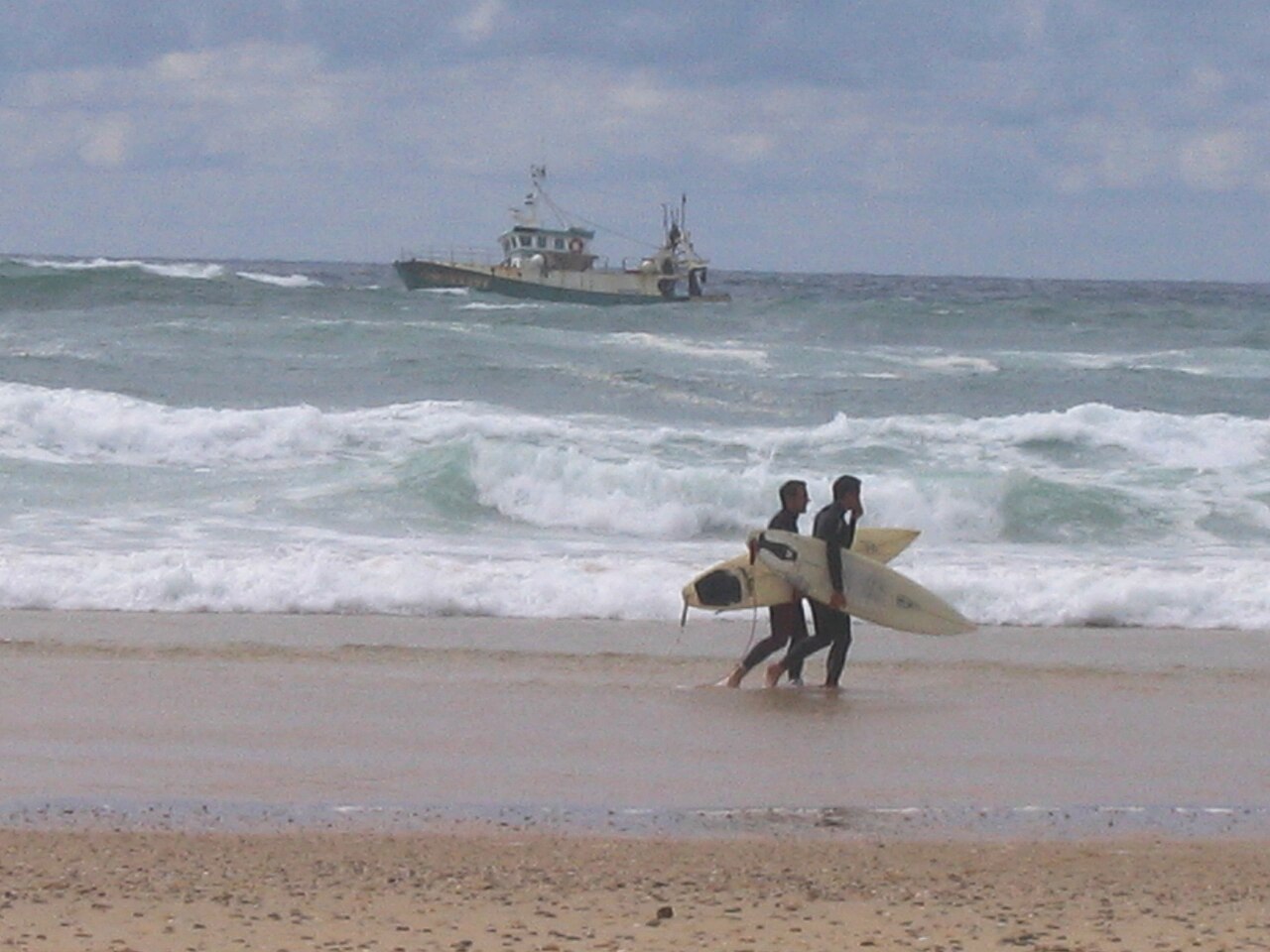
Intriguing the first navigators, surfing was only exported very recently. In France, its arrival is associated with Biarritz, where the American screenwriter Peter Viertel and the “tontons surfeurs” made the discipline known in the 1950s by sliding Californian boards over the breakers of the Basque coast. It was not until the 1980s that many other spots were identified, to the point of making the Atlantic coast a surf territory recognised around the world.
Part of the original philosophy travelled with the practice: an art of living in contact with a force of nature that one learns to observe, understand and respect in order to enjoy its power, beauty and benefits safely. Yoga and meditation often join the world of surfing, in posture and in the way of being on the board. Every year, surf groups, associations and federations also organise shoreline clean-ups and ocean protection actions.
For centuries, waves and tides have constantly redrawn the coastline, from the Spanish border to the Gironde estuary. This is what is called coastal erosion: the meeting of the matter of the land and the movement of the Atlantic’s waters. Rock long ago gave way to sand, which moves with tides and storms. The famous Dune du Pilat is, on a geological scale, merely a sandcastle destined to fall apart in order to re-form elsewhere.
On the scale of a human life, the phenomenon long went unnoticed. But within a few decades, people built right on these imperceptibly shifting soils, and the result has become visible: the German army’s bunkers, though among the sturdiest buildings ever built, sank under their own weight and tipped over onto the beaches.
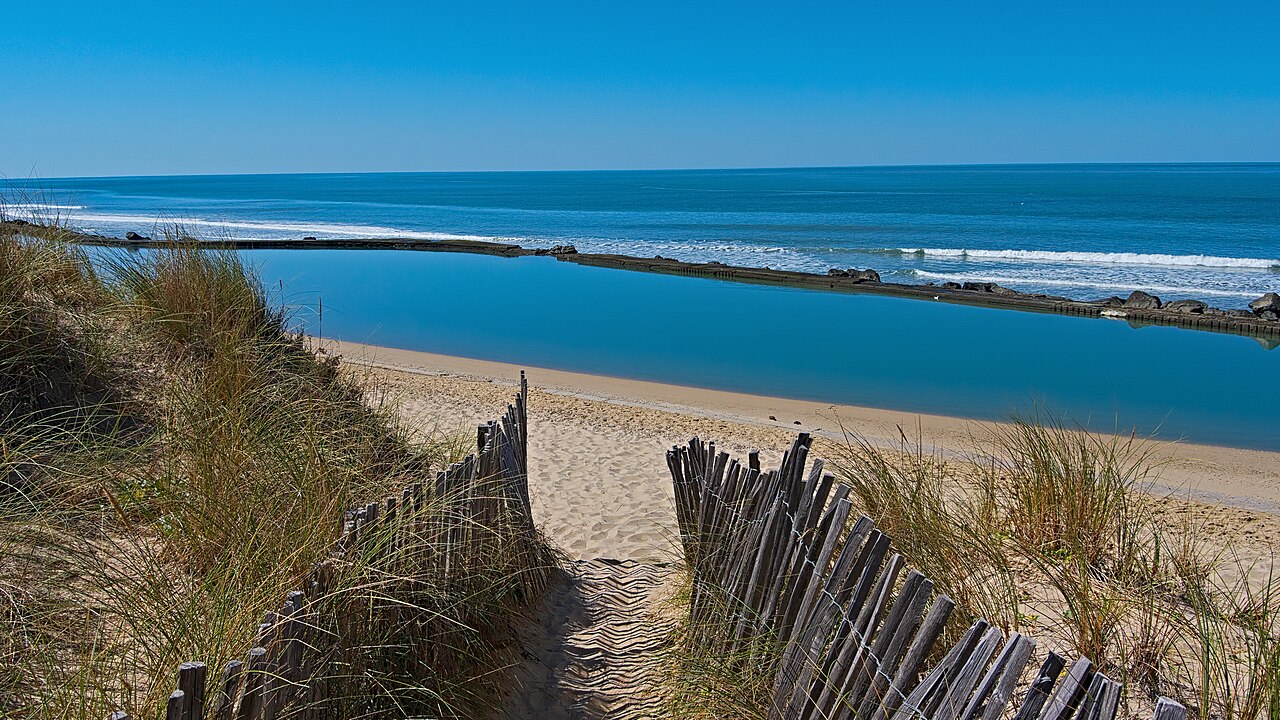
For years, the strategy was to fight: building and maintaining ever stronger structures, still subject to erosion and never safe from having their capacity exceeded. This was the case, among others, with the seawater pools at the tip of the Médoc, designed more as a mitigating element than as a shield. Learn more (Sud Ouest)
Other emblematic structures have disappeared. This is the case of Le Signal, in Soulac-sur-Mer: this building, constructed during the Trente Glorieuses to meet residential demand in a seaside resort, had to be evacuated as the shoreline advanced, stripping away the sand it stood on. The memories of many families went with its last stones, demolished in 2023 to make way for a promenade whose years are also numbered. Learn more (INA)
The phenomenon is now amplified by rising waters, themselves linked to the global warming that humans have been fuelling since the industrial revolution. Municipalities such as Lacanau or Soulac-sur-Mer are pioneers of a planning strategy, now enshrined in law, that aims to gradually move buildings back inland.
The urbanisation of the coasts has not had only material, economic and social consequences. Extracting sand from beaches for construction needs has impoverished them, and the vegetation adapted to these soils and climatic conditions, yet fundamental to the dune ecosystem, had to be removed. This vegetation extends the lifespan of the coastline and protects the interior from storms coming off the ocean. Dune grass fixes the sand on their surface, while the pine forests, in the second line, hold their position against the sea.
By sealing soils in favour of rigid, massive volumes, we not only built less durably against natural phenomena, we also left a void: the sandy massifs found themselves bare, without structure, with breaches in the barrier the forests could offer them.
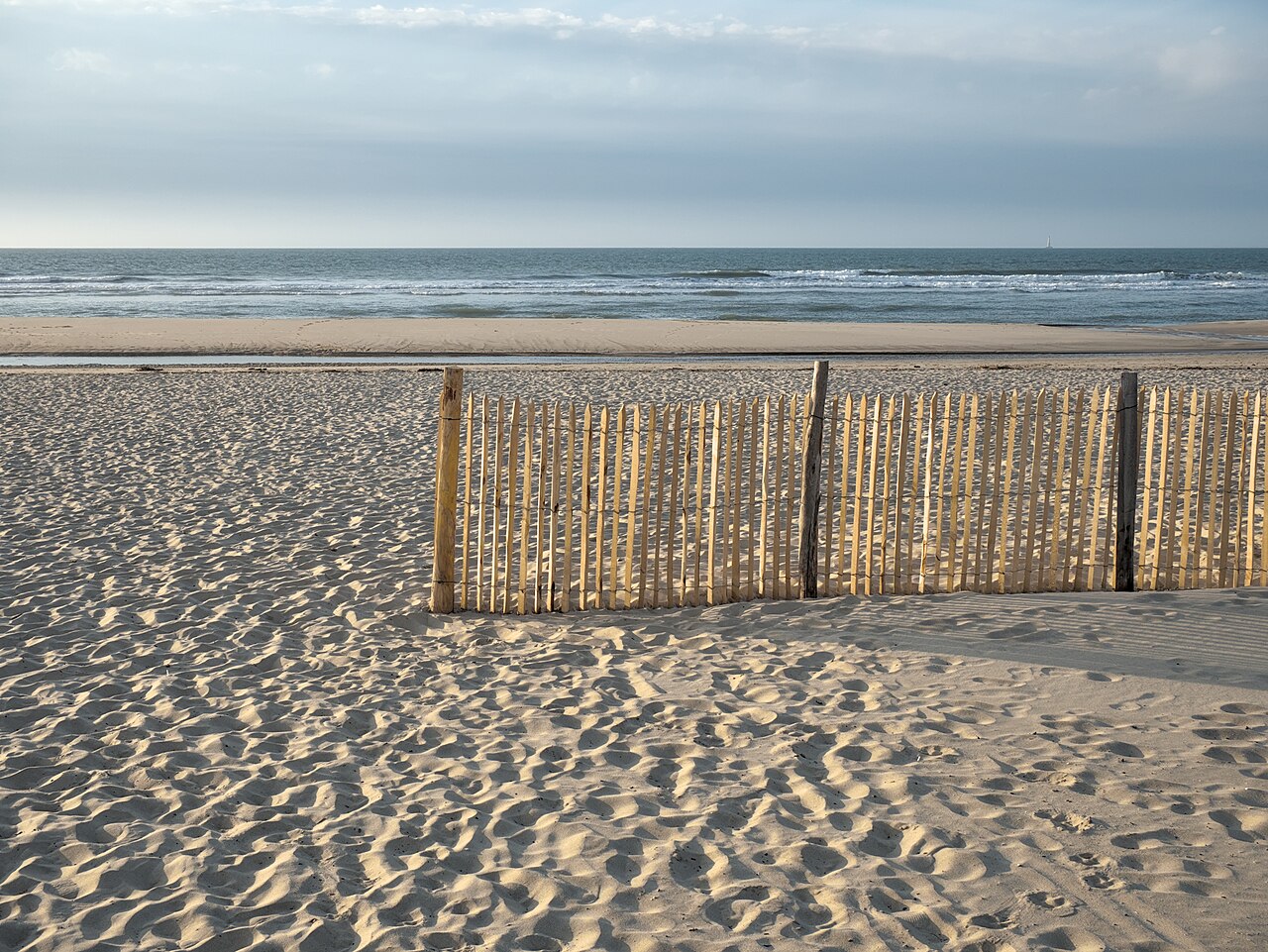
Protection and restoration programmes are now in place to preserve this ecosystem and encourage its regeneration in the areas abandoned by urban planning: replenishing beaches with sand, restoring natural dunes and thus strengthening coastal protection.
This work is visible in particular in no-access dune zones, marked out by ganivelles. This wooden assembly, besides forming a fence, lets the wind through while breaking it, which helps the sand to settle and bind. We chose this same type of fence to mark out part of the boundary of Aloudi House.
Guest reviews
Very peaceful, sunny place, lovely relaxing terrace. The air conditioning is welcome with this summer’s high temperatures. Very clean and restful, perfect facilities. Pretty little wooden house on stilts and very practical.
We had a pleasant stay. Lovely terrace, and our dogs enjoyed the large, well-fenced plot.
Small, well-equipped accommodation, as described. Very pleasant terrace, and the host is responsive to our requests.
The property is fully fenced, a real plus with dogs. The place is very cosy, the terrace is nice and big. The electric barbecue is also a plus.
Quiet, fenced place, perfect for dog owners, with a code system for the gate.
Practical information
No: Les Olives, Les Cantines and Le Gurp beaches are 9, 11 and 13 km away, by car or by bike.
No, but you can stroll there: fishing nets, the port of Talais and sunsets.
Yes, on request. The plot is fully fenced and the gate works with a code. A supplement may apply.
Our neighbour acts as the tiny house’s concierge.
Yes, the tiny house is air-conditioned, which is precious in summer.
Yes: Tiny’Loudi can also be booked in addition to Aloudi House for group stays.
Book direct
Pick your dates, see the price straight away, then book.
Tiny’Loudi · Talais, Médoc · La Résilience. See also Aloudi House, the neighbouring house.
Photo credits: Le Gurp beach, Eggvert (CC BY-SA 4.0); port of Talais, René Hourdry (CC BY-SA 4.0); Soulac beach, Touam (CC BY-SA 4.0); Soulac basilica, Renhour48 (CC0); Gironde estuary, Lfontanie (CC BY-SA 4.0); Hourtin-Carcans lake, Florian Pépellin (public domain); Vensac mill, Renhour48 (CC0); Le Signal in Soulac-sur-Mer, Anthony Baratier (CC BY-SA 4.0); Le Verdon-sur-Mer seawater pools, Andreas Eichler (CC BY-SA 4.0); ganivelle in Soulac-sur-Mer, Touam (CC BY-SA 4.0); surfers in Lacanau-Océan, Pierre André Leclercq (CC BY-SA 4.0), via Wikimedia Commons.
Legal notice · Privacy policy · Rental terms · SCI La Résilience, 61 rue de Lyon, 75012 Paris · SIRET 843 580 705 00021 · Meublé de tourisme, n° d’enregistrement : 52126S0002 · Hébergeur : o2switch
Photo credits : Plage du Gurp : Eggvert (CC BY-SA 4.0) · Port de Talais : René Hourdry (CC BY-SA 4.0) · Soulac-sur-Mer : Céréales Killer (CC BY-SA 4.0) · Basilique : Minou85 (CC BY-SA 3.0) · Carrelets : Grand Parc – Bordeaux (CC BY 2.0) · Lac d’Hourtin-Carcans : Florian Pépellin (domaine public) · via Wikimedia Commons.